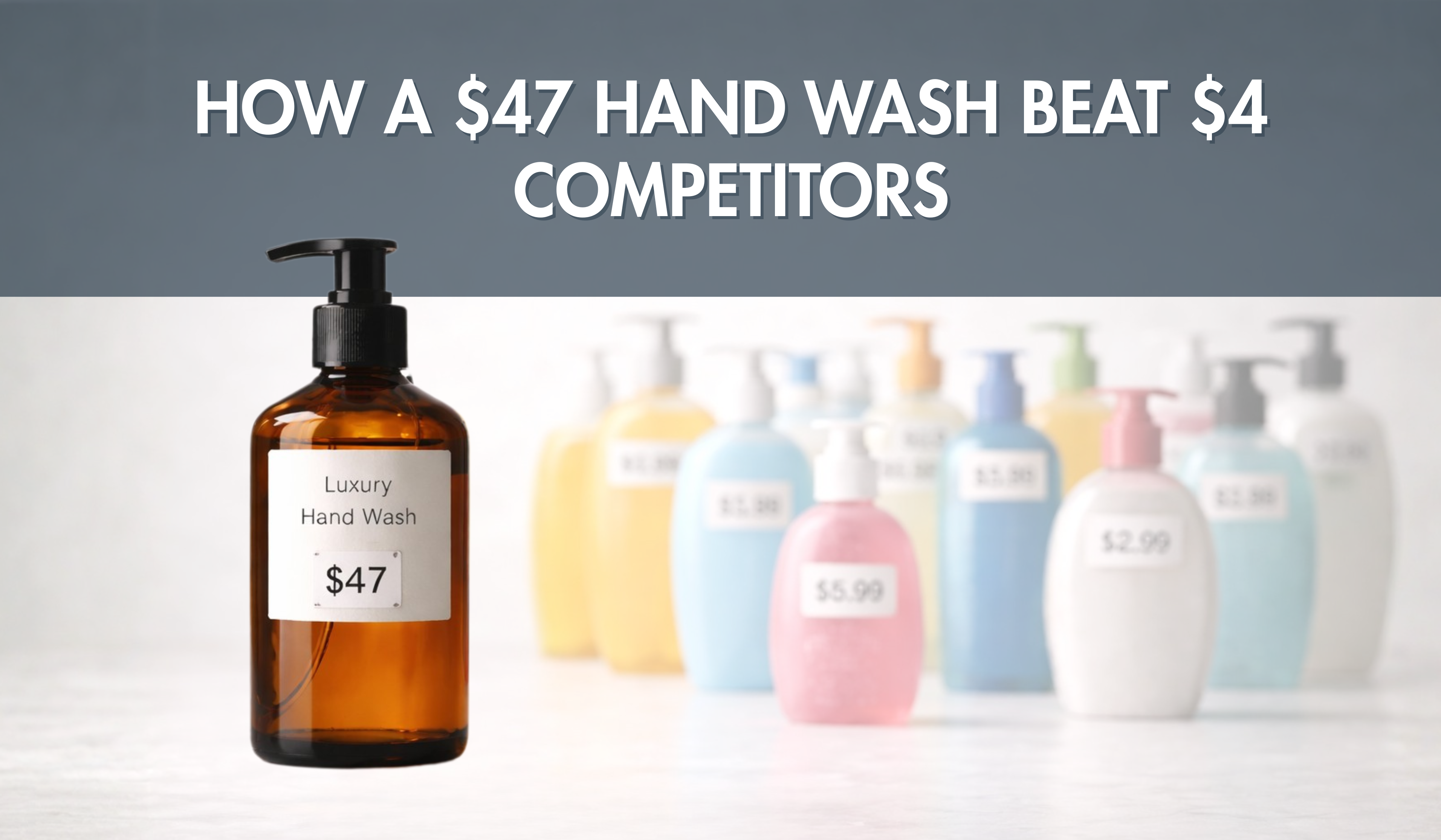
A $47 hand wash just ranked #12 on Amazon, every other product in the top 25 is under $10.
Here's what that tells us about the future of prestige beauty on marketplaces.
There's a piece of conventional wisdom in the beauty industry that goes something like this: Amazon is for mass. If you're prestige, stay away — or accept that you'll be buried by cheaper alternatives.
We just proved that wrong.
A luxury Australian beauty brand we partner with achieved a #12 ranking in the hand wash category on Amazon — with a product priced at $47. For context, every single product in the top 25 is priced under $10. The next premium hand wash over $30 doesn't even appear until position #71.
This wasn't a fluke. It was 18 months of strategic execution. And the lessons apply to any prestige brand trying to figure out whether marketplace platforms belong in their channel mix.
Starting from #364
When we began, the brand's hero hand wash sat at #364 in the category. Unauthorized sellers — including major retailers listing without permission — were suppressing the Buy Box and diluting brand equity. Meanwhile, Amazon's algorithm was doing what it always does: rewarding velocity, reviews, and low prices.
A $47 hand wash competing against $4 alternatives? Traditional marketplace logic said this was unwinnable.
So we stopped playing the traditional game
Instead of competing on price, we built a strategy around maximizing conversion at premium price points. Here's what actually moved the needle:
We let the data tell us what to bundle. Market basket analysis revealed that 8% of customers buying one hero hand wash variant also purchased the complementary scent. That insight became a duo set with optimized imagery and SEO. By year-end, it was moving 1,100+ units monthly — a new seven-figure revenue stream that also lifted average order value.
We conquered non-branded keywords. This was the real unlock. Rather than relying on customers who already knew the brand, we went after category-level searches — and converted at rates that surprised even us. "Hand wash" converted at 34%. "Body cleanser" at 33%. These are discovery-stage shoppers choosing a $47product over $4 alternatives, because the listing made the value undeniable. We generated 94.3 million advertising impressions in 2024 alone.
We treated the Amazon Storefront like a flagship, not a catalog. Rigorous A/B testing on navigation, seasonal page prioritization, and organizing skincare by concern (not just by product) transformed the storefront into a conversion engine. Result: 17% of total sales now come through the Storefront, with average order values running 10% higher than standard search traffic.
We turned a regulatory threat into a competitive advantage. When New York State banned 1,4-Dioxane, we worked directly with Amazon to implement targeted order blocks for affected products — maintaining compliance while keeping sales running everywhere else. Most brands scrambled. We were already positioned for seamless reintroduction.
The numbers speak for themselves
The brand went from $11.5M to $21.3M in two years — that's 85% total growth. Customer growth hit +38% year-over-year, with repeat purchase rates improving by 6.5 percentage points. And the category expansion tells an even bigger story: their Eau de Parfum grew 473% while Amazon's women's fragrance category grew just 14%. Hand wash sales grew 73% while the overall Amazon hand wash category declined 34%.
The brand didn't just outperform the category. It inverted the entire competitive dynamic.
What this means for prestige beauty
The takeaway isn't that every luxury brand should rush to Amazon. It's that the old binary — marketplace vs. prestige — is a false choice.
Amazon's algorithm doesn't actually reward low prices. It rewards relevance. When you prove to the platform that your premium product solves the customer's problem better — through superior content, strategic positioning, and relentless optimization — the algorithm responds accordingly.
The brands that will win the next chapter of prestige beauty aren't the ones avoiding marketplaces. They're the ones treating them as brand-building channels with the same rigor they'd apply to their own DTC or retail partnerships.
A $47 hand wash at #12 in a category dominated by sub-$10 competitors isn't an anomaly. It's a proof point.
At SAYN Marketplace Solutions, we partner with prestige beauty brands to build and scale their marketplace presence while protecting brand integrity. If your brand is navigating the tension between premium positioning and marketplace growth, let's talk.